You can tell a lot about a president from the kind of dog he likes, and whether he likes dogs at all. Jack Kennedy surrounded himself with canines. His favorite with a welsh terrier called Charlie, who sat by his side during the Cuban Missile Crisis and proffered his head for a thoughtful scratch during moments of tension. After the Crisis was resolved, Nikita Krushchev gave the Kennedys a mongrel called Pushinka, who was the puppy of a Russian dog that had been used to test space rockets. Pushinka and Charlie had four puppies together. JFK called them pupniks.
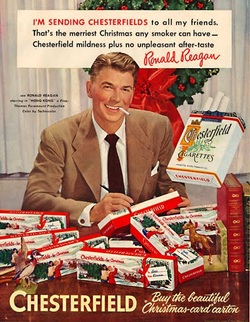
In contrast, Harry Truman hated dogs and Reagan only got one towards the end of his term. Gerald Ford kept a stolid but dull golden retriever and George W. Bush had two egotistical Scotties (he called Barney “The son I never had”).
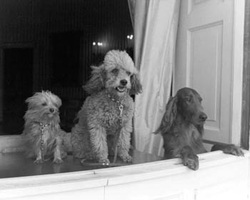
But the real surprise is the Trickster. In the slanderous but brilliant movie Nixon, Oliver Stone penned a scene where the hero’s own dog refused a biscuit from him in fear. Nothing could be further from the truth. Nixon loved dogs. Of course his most famous pooch was Checkers, but as president he kept three others: Pasha the terrier, King Timahoe the Irish setter, and Vicky the poodle. Timahoe caused some difficulty and was put in the care of the Cuban houseboy, Manolo, who spoke little English. Nixon asked for regular updates on the dog’s behavior and, on January 26, aide Alexander P. Butterfield wrote a reply. “I just had another long, agonizing and in-the-main unenlightening ‘conversation’ with Manolo,” he complained. “The next time you want some information on the subject of doggie affairs… I’m going directly to the dogs.”
The trio even came up during the Watergate hearings. Senators Russell and Mills revealed that they travelled at public expense above Air Force One. The public were appalled at the suggestion that the pooches should pay for their airfares and Russell came out swinging in reply. Realizing that he had offended dog lovers, he claimed that it was Nixon’s lawyers who had tried to make an issue out of it and thus “invaded the dog’s privacy” to begin with. Russell said, “If I could talk dog language I would urge that King Timahoe to chase [the lawyers] right out of the White House next time they appear on the scene. I understand that King Timahoe, Pascha and Vicky have had hang-dog looks since the unfortunate thing was blown out of proportion.”
But for my money, the most revealing thing about the dogs was Nixon’s affection for Vicky the poodle, who was a gift for his daughter Julie. I was raised with a poodle and would say that they are difficult dogs to love: highly intelligent but also stubborn and independent. It takes a certain kind of will to master and develop a relationship with a poodle, who can love you one minute then decide they’d rather raid the pantry and disappear the next. Nixon remains an illusive personality to the historian, but I suspect he would have appreciated that mix of canine loyalty with cat-like willfulness. Along with his incredible bibliophilia, love for very bad martial music, and flirtation with Catholicism, it’s one of the few clues we have as to what made the Trickster tick.
In contrast, Harry Truman hated dogs and Reagan only got one towards the end of his term. Gerald Ford kept a stolid but dull golden retriever and George W. Bush had two egotistical Scotties (he called Barney “The son I never had”).
But the real surprise is the Trickster. In the slanderous but brilliant movie Nixon, Oliver Stone penned a scene where the hero’s own dog refused a biscuit from him in fear. Nothing could be further from the truth. Nixon loved dogs. Of course his most famous pooch was Checkers, but as president he kept three others: Pasha the terrier, King Timahoe the Irish setter, and Vicky the poodle. Timahoe caused some difficulty and was put in the care of the Cuban houseboy, Manolo, who spoke little English. Nixon asked for regular updates on the dog’s behavior and, on January 26, aide Alexander P. Butterfield wrote a reply. “I just had another long, agonizing and in-the-main unenlightening ‘conversation’ with Manolo,” he complained. “The next time you want some information on the subject of doggie affairs… I’m going directly to the dogs.”
The trio even came up during the Watergate hearings. Senators Russell and Mills revealed that they travelled at public expense above Air Force One. The public were appalled at the suggestion that the pooches should pay for their airfares and Russell came out swinging in reply. Realizing that he had offended dog lovers, he claimed that it was Nixon’s lawyers who had tried to make an issue out of it and thus “invaded the dog’s privacy” to begin with. Russell said, “If I could talk dog language I would urge that King Timahoe to chase [the lawyers] right out of the White House next time they appear on the scene. I understand that King Timahoe, Pascha and Vicky have had hang-dog looks since the unfortunate thing was blown out of proportion.”
But for my money, the most revealing thing about the dogs was Nixon’s affection for Vicky the poodle, who was a gift for his daughter Julie. I was raised with a poodle and would say that they are difficult dogs to love: highly intelligent but also stubborn and independent. It takes a certain kind of will to master and develop a relationship with a poodle, who can love you one minute then decide they’d rather raid the pantry and disappear the next. Nixon remains an illusive personality to the historian, but I suspect he would have appreciated that mix of canine loyalty with cat-like willfulness. Along with his incredible bibliophilia, love for very bad martial music, and flirtation with Catholicism, it’s one of the few clues we have as to what made the Trickster tick.
 RSS Feed