Picture
This morning at 7am, I attended Mass at a convent two blocks down. It’s a cloistered establishment; the nuns live behind an iron grill. Before the service starts, a giant wooden screen descends from the ceiling, cutting the chapel in two and hiding the saintly ladies behind it. If you strain your ears, you can hear them gently reciting the Ave Maria through the walls. The chaplain is older than the palm trees that brush against the bell tower. He conducted the entire Mass sitting down. “I’m very tired,” he told us. “And the day has only begun.” This is what a religious life is like for most people who try to live one: quiet, human, mysterious, wonderful.

I returned to my computer to discover that I’ve caused a minor storm in the community of politicized Atheists. I had spent the previous day hung-to-the-over, lying in bed moaning, eagerly awaiting the Rapture. When it didn’t happen, I flicked through the dailies to discover predictable joy at the embarrassment of a small group of religious-types. I wrote a piece for the Telegraph bemoaning the demonization of evangelicals. Sincerely, I meant to say this: “Yes, it is foolish to try to predict Armageddon, but these people are but one small segment of evangelical culture – a culture which is diverse, ever-changing, and of tremendous historical importance to America.” I concluded that it was mean-spirited to celebrate other people’s humiliation and that greater tolerance should be shown towards a movement that works tirelessly to improve people’s lives. I received one nice email from a gay evangelist; whose very existence I feel proves my point.

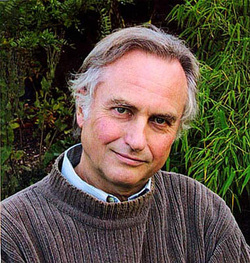
Alas, the article was not taken quite so well elsewhere. Richard Dawkins wrote on his website, “I’m struggling to find a reason why American evangelical Christians deserve even a little respect, and I’m not struggling at all to discover that Tim Stanley merits no respect at all.” Grammar reveals a lot about a person. When it’s strictly speaking accurate but one still struggles to decipher the meaning of what has been said, you know you’re reading a sentence written by an academic.

I am frustrated that Prof. Dawkins has dismissed me so easily and so cantankerously. I will only say that I hope his wife doesn’t share his view, as I’ve long admired her. She played a heroine in my favorite TV program, and wrote books about needlework that obsessed my Baptist mother during her most creative patchwork craze. Ironically, her patterns were replicated on a thousand church cushions that my mother ran through her old Singer while humming “Heavenly Sunlight”. But Prof. Dawkins’ ad hominem attack is nothing compared to this remarkable piece of class warfare. I am, according to someone I’ve never met, “a fancy little boy” (thankyou?) who is destined to be a New York Times op-ed writer (again, thankyou?). The critiques I have received are full of odd paradoxes. One blogger accused me of being “immature”. He has as his profile picture a photo of Harry Potter.

People have taken offense in two prime ways. First, they don’t agree with my reading of history that evangelicalism has shaped American democracy. Actually, that’s a no-brainer. The Puritan influence is up for debate; while some historians see them as inflexible theocrats, others argue that their surface authoritarianism was bound by an inner quest for personal enlightenment that was freely obtained and not coerced. But on the influence of the first and second Great Awakenings, historians are at one in acknowledging that evangelicalism shaped social egality, notions of citizenship, and the party system. [I said that Jonathan Edwards was the “greatest” American theologian. Mea Culpa, that’s my personal prejudice. But it’s not unique]. I would urge those who care to get a copy of Richard Carwardine’s Evangelicals and Politics in Antebellum America (Knoxville: University of Tennessee Press, 1997). It’s the definitive book on the subject and you’ll read how everything from mass participation to female emancipation finds some root in inter-evangelical debate. The positive role played by evangelicalism was felt during the 1960s Civil Rights movement and is still there today in campaigns for prison reform and debt relief. True, some denominations opposed all those things. But my argument was never that evangelicalism was everywhere and always good – just “complex and nuanced”.

Second, some readers have inferred – disingenuously – that I think religious people are charitable but atheists are not. Again, the point of the piece was not to attack atheism as a philosophy but to defend evangelicals as human beings. I do think it is in poor taste for some atheists to celebrate the misery of those who thought they’d be raptured but weren’t. (That said, I’m quite glad I wasn’t. I’m not ready to face my bank manager or my priest, let alone God.)

This second point goes to the heart of a lot of the criticism my piece received: my critics hadn’t actually read it. At least, they read it myopically – picking out a single sentence (or even a couple of words within a sentence) and extrapolating from a handful of syllables that I favor witch burning and table-wrapping. There is an excellent movie due out soon called Patriocracy. It argues that the national conversation about politics has become debased by extremism, of a blanket refusal to even hear another’s argument. I agree. True, I wrote a piece that had an obvious agenda. But it was filled with equivocation and cowardly sub-clauses, things that I always put in my writing because I’m careful not to reduce everything to an idée fixe. Yet the anger of the debate about religion seems to have blinded some people to subtle argument, and the instantaneous nature of blogging means that – rather than sit down and construct a thoughtful letter as in days of yore – they are able to type “Fuck you, you posh twat”, press return, and publish it within seconds.

That’s all fair enough, and I don’t really mind because that’s what I signed up for when I started blogging for the Telegraph – a paper whose very existence drives some hipsters into intensive yoga. But I am disappointed that Prof. Richard Dawkins – a professor of Oxford, no less – is capable of similar yobbery. He is a fellow academic after all, and he probably knows just how highly we prize our “respect”. It is our economic and emotional sustenance, and I would never deny it to anyone as easily as he has refused it to me.

 
 
Picture
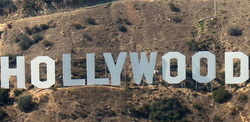
I am waiting to interview a man who has been taken into Cedars-Sinai hospital for heart surgery. This is not a hospital, it is a hotel. I’m eating a bagel in the lounge, where a grand piano mechanically recites “Memories”. There is a gift shop, selling Cedars-Sinai bags and pillow cases. The staff look like hotel porters of the Viennese, Hotel Sacher variety. A doctor – a beautiful woman who could well be an actor between scenes – tells me she loves my tie. “Why thank you,” I say. Actually, I’m the best-dressed person in Los Angeles. Formal attire is turning up wearing clothes.

Los Angeles has inspired a mini-freak out in me. I haven’t been eating and have shed pounds. My hair is un-kept and huge, sitting on my head like an agitated cat. I saw a photo of me at a party for a producer and I looked like a German lesbian dressed for the admiral’s club.

I’m catching LA’s worst disease: self-delusion and paranoia. One moment I think I’m Tolstoy reborn; the next I’m a talentless hack from Siberia. That’s the problem with a town where everyone is on the make, where status is never secure. It’s a land of a thousand opportunities and a million disappointments. What do people want from me? What am I supposed to give to them? Have I been nice enough, or should I actively try to be nasty – and thus define myself as an egotist with talent? Funny or bland, sexy or neutered, fast or slow, English or American; it’s impossible to tell what this hungry city wants. Yet I see that fear in everybody’s eyes – the fear that you’re not connecting (and we must connect!), that you’ve said something wrong, that you’ve blown your one opportunity to make it, that the person you sat next to on the bus MATTERED, and that after all this there is… nothing but the inadequate reality of everywhere else.

(We are all like that here: vegetarian zombies. Some people in the Cedar-Sinai lounge are cancer patients numbed-out by Morphine, some are actors. They all have the same blank, frightened expression.
Is that doctor who liked my tie a real doctor, or Sophia Coppola in disguise? Five days and just three bowls of oatmeal and I’m thinking… am I thin enough for you? Is it the tie you like, or me? Do you want the tie? Have the tie. “Take the fucking tie, Sophia.”)


One way to escape the madness is to go to the Beverly Hills Hotel. The Bevs, as the locals call it, is a big pink marshmallow. It is impossible to tell what shape it is supposed to be, as it softly conquers the bloc in all directions. Somehow, we always seem to enter from the basement. The inside is mint green, with waves painted on the walls. The downstairs bar is where wealthy joggers and expensive hookers go for brunch. Walk up the stairs and you’re in a brothel designed by Bertie Bassett: plump strawberry cushions with candy stick frames and chocolate-colored furniture. The lobby is full of squabbling rich tourists who are angry about the fact that they didn’t realize no one stays at the Beverly Hills Hotel anymore. Fat Russian kids run amok; men in tennis shorts sit smoking on the step.

The Bevs is a secret known only to a small clique of neurotic artists that drink tea in the splendid tearooms on whatever floor has undulated to the Earth that afternoon. There are one or two Republican Lounge Lizards of the old school (“Well, of course, Betty Ford was too busy to be President”) and a bankrupt businessman nursing a water. The piano tinkles and the gentle laughter of pretty women in hats laps at the ears. Our waiter is called Greg and he might be a standup comedian because he keeps telling us jokes about Los Angeles traffic. We order tea for three and a Negroni. He takes the order, tells a gag, and is never seen again.

The set that hangs out here is extravagant. We occupy a half-donut sofa piled high with tortilla chips and sugar cubes. There is Lenora Claire with her amazing red hair, Jamie Ruddy who makes movies about Jewish gangsters, two writers, the crypto-academic Rupert Russell, me in linen and bowtie, and a man in dark glasses who just tagged along and never says a word.

What is different about these people is that they are unusually contextualized in their thought. Hollywood writing is very two-dimensional and functional: you could make a movie about Henry VIII here without even knowing that he was English. That’s not a criticism, it’s just that ideas are presented for their immediate relevance rather than their intellectual quality. People are into pandas right now, so let’s animate Henry VIII as a talking panda.

Imagination unloosened from facts is liberating, but it also accounts in part for the paranoia I feel in Cedars-Sinai hospital. My qualifications (and I have hundreds) are grounded in facts, but those facts are useless unless they serve the purpose of entertaining people. Smart is better than clever here – fluidity and flexibility are encouraged. What I have to offer is not important in itself just because it comes from Cambridge University. It must suit the purposes of those oligarchs who work for Universal or Paramount, who decide (with the toss of a coin) what is fashionable and what we all really want.

The Bevs Set is a bit better read. They are inclined to point out to producers that Columbus wasn’t black even if Will Smith is, or that the Queen of England is a woman. It’s pleasant to come and discuss movies as art with a theory and a structure, not just a camp artifice. We discuss music in Argento, blondes in Hitchcock, MTV in Stone, sex in Truffaut. And we swap tips on how to get ahead. Here’s a goodie: whenever you go to a meeting, demand something unusual to establish your authority. One of our number once walked into a room with a producer and immediately asked for a Kiwi fruit. She wouldn’t even talk to the people in there until it arrived, moist and pre-peeled on a white china plate. The result: a three movies deal and a better parking spot.


Back to fear and loathing in Cedars-Sinai. The piano is now being tuned by a Mexican with a handle-bar moustache. The stomach clenches and the bitter taste of green tea give me the sensation of being on a boat. I look hungrily at my phone. Will Robert Redford ever return my call? Is there any more I can do to impress him, to make him like me, to earn the right to call him Robert? The phone rings. It’s one of the Bevs Set.
“I’m in Wendy’s in Westwood. I think Ivana Trump is on the next table.”
“There’s a Wendy’s in Westwood?”
“Yeah.”
“How does Ivana look?”
“Well, I guess you don’t dress up for Wendy’s.”
“No.”
“Even in Westwood.”
“Yeah. I have to go. This doctor just said that she likes my tie. She could be a director or something.”
“Go for it.”
Actually, I just need to bring up that bagel.


Picture
Air flight is amazing. Just 24 hours ago, I was in England packing my bags. Now I am in the Hollywood DMV (Dept. of Motor Vehicles) queuing up to apply for a driver’s license. I am not dressed appropriately for the Los Angeles heat: blazer and tie and a pair of grey slacks. A crazy old white guy is drawing attention to me by pointing and shouting, “Ni**er! Ni**er! Hey ni**er boy! Look over here!” I am amazed that none of the DMV staff (who are all black) punches him in the face. He continues uninterrupted. “Hey ni**er boy! What you doin’ here ni**er?”
Eventually, I whisper, “Sir, I am not an African-American.”
He looks shocked. “You got a problem with me calling you a ni**er? You some kind of racist, boy?”

I have moved to America for three months to research my next book. The subject is celebrity activism, so I’ve rented an apartment in Los Angeles. Everything is satisfaction, bar just one thing: I can’t drive. In Los Angeles, not being able to drive is the equivalent of being a paraplegic who lives on the top of a mountain. I can’t go anywhere. 


Britain won’t give me a driver’s license. I’ve tried five times and the buggers won’t say yes. The test is insanely hard and even harder for an academic who is distracted by bird flight. The failure would be easier to take if the examiners were nicer people. Invariably, they are all bitter and fleece-wearing, and always seem to have been served their divorce papers on the day I want to pass. So I’ve decided to learn in California. The experience nicely illustrates the enormous difference between our two cultures.


The difference boils down to this: in Britain you look in your mirror and signal before turning. In America, you signal and then look in your mirror before turning. The emphasis in the UK is upon caution. In the US, it’s all about speed. In some circumstances, you can pass a red light. You are encouraged to cross your arms when turning the wheel. The driving test in the UK takes 40 minutes; here it can take 10 minutes. O, and the only maneuver you have to carry out is reversing backwards in a straight line.


And yet, at face value, America is far more bureaucratic than Britain. The DMV website is incomprehensible and you have to show up in person and queue to get anything done. Technically, you have to be a citizen with a Social Security number to get a license.


But all these rules are flimflam disguising a pleasantly nonchalant attitude towards regulations. The government is so underfunded that they can’t possibly be enforced; and so desperate for cash that they try to make it as easy as possible to pass. Take the “permit” test – the American equivalent of the theory exam. It takes place in a room with no cameras and no controls over what paperwork you bring in (I saw someone clutching a fat “How to Pass Your Permit Test” book). You take as long as you want over 36 brain-dead questions (i.e., “Is it legal to snort coke and drive over the speed limit in a 30 MPH zone?”). Then you queue and the paper is marked in front of you by a gorgeous Latino girl with a red crayon. If you fail, you get two more goes. If you fail twice more you pay just $6 and start all over again. 

A guy in a “USA – Fuck Yeah!” t-shirt told me that all of this was done to help illegal aliens to get a license. “The government figures that it’s a way of getting them into the tax system.” There might be some truth in that. For some reason, I sailed through despite being a foreigner without a visa. In fact, I think I may now be a citizen of the United States: I am certainly registered to vote in California. I won’t say which party I ticked, as I like to maintain an air of mystery.

But really, it’s all part of that free-market spirit. Europeans don’t care what happens, so long as it is done right. Americans are more interested in the final product. They say, “You want to do this, and I want to do that. How can we strike a deal?” I want to drive and the state wants my taxes, so we negotiate an understanding. They’ll let me pass and if I kill anyone, they’ll take away my license. Strip away several decades of liberal lawmaking and you still find a pioneer spirit of risk and enterprise. Just ask the Mexican guys who hang around outside Home Depot, selling their labor to anyone who wants a hand moving a bookcase or mowing their lawn. For all our dreams of control and order, the economy ticks anarchically on.

***

My driving instructor is a punk rocker. This morning he told me all about the gang members he has taught to drive: “They’re just happy to have something to do that isn’t killing other people.” In Los Angeles, even crime takes on a glamorous, celebrity-orientated edge. The Krips and the Doritos (whatever) hold parties that you can hear the other side of town. They wear chunky jewelry and write best-selling rap albums about the travails of keeping an eye on your “ho”. We cruise through a city that is not a city, but an archipelago of blocks – some violently opposed to each other. I’m in Beachwood, which is rich, white, and a bit gay. East, there’s poor Hollywood, South there’s tourist Hollywood, West there’s Beverly Hills, North there’s a huge mountain range. But none of these places interact and people get from point to point by island hopping – getting in their car and driving straight from the Hills to Bevs, without stopping or passing Go or giving $200 to a Dorito.

The architecture is democratic. You want to live in a chateau? Then build a chateau! I live in what looks like a converted 1920s cinema, wrapped in sexy green lines and curves. Opposite me is the Doge’s Palace from Venice, complete with barber-shop polls sticking out of the ground. Chaplin built a grey castle two doors down. At the end of my road is a working ranch. When Los Angeles decided it wanted to compete with New York, it built a downtown in the 1980s. It’s a miniature Wall Street that erupts from the middle of the sprawling suburbs. Being California, they build swimming pools on the top of the skyscrapers.

My landlady is a fabulous Hungarian. She makes liberal documentaries and her apartment (which I sublet) is filled with a strange mix of anticommunist literature, portraits of the Virgin Mary, and erotic photography. There is a map on her fridge showing all the yoga centers in the city. Most incongruously of all, I found that she has a fine collection of scripts for British sex farces. The lines are marked in highlighter pen, so I think they have been performed. It gives me great pleasure to imagine a Hungarian acting troop delivering Donald Sinden’s lines in heavy accents in front of an audience of UCLA hippies. Perhaps Carry On is big in Budapest. I know Norman Wisdom is huge in Albania.

***

This is the first of many such letters. I'll be taking in New York, Las Vegas, South Carolina, and the San Francisco commune in the next few weeks. Right now, I’m going to have a drink. I’m in America, but those who know me well know that I long for the Southland really. I shall visit it soon and sit outside by the dusty road drinking Buds with old friends. Los Angeles is too smart, too sassy for that. Being so close to Dixie makes my ears ring. So I shall stretch out on the yoga mat and dream of that land of cotton.


Picture
A brilliant academic, Toby Jackman, has passed away (see pic. left). With him goes the Cambridge University of old. It is a damning indictment of Cambridge’s current priorities that it didn’t inform its alumni of his death. I only found out myself two months later via a mutual friend. He was a dear, gentle, eccentric man who typified the academic aristocracy of the postwar West – eternally curious, yet strangely disengaged.

He was born Sydney Jackman, but took the name “Toby” in honor of his favorite teddy bear. After his Californian parents died, Toby was raised in Canada by his grandparents. He took a BA in physics (shudder) at Washington State, followed by a PhD in history at Harvard. He was very proud of the fact that his PhD was a biography: something few tutors would tolerate nowadays. Toby was interested in narrative and anecdote, which are discouraged in contemporary academia. It’s not true that he produced no further significant work, but he really used his Harvard connections to build an international collection of acquaintances and to turn himself into a latter-day flaneur. Among the names in his rolodex were Paul Mellon and John Julius Norwich. He collected art and distributed his family’s cash across the academic world. He excelled as an administrator and a teacher and established himself as a fellow of St. Edmund’s Hall in Cambridge. That’s how I had the pleasure of meeting him.

Toby took me and a friend to lunch one afternoon. He was tall and slight and quite blind, but was a charismatic magnet for conversation and gossip. He was fascinated by the revival of Catholicism in Cambridge (of which I was only a tangential part). High religion was to his generation a sin worthy of the Greeks but he reveled in the exoticism of our company. He struck me as an old fashioned Anglo-American liberal: more English than the English, but without their unpleasant snobbery. He was the kind of campus radical who might have campaigned (read: sign a petition) for nuclear disarmament, but not stopped too long lest he miss cocktails with Gerald and Betty Ford.

The point of a Cambridge education to men like Toby was to cultivate mind and character. The aspiration of getting a job was vulgar; equally silly as wasting one’s time and opportunity on drugs and sex. He threw out and absorbed the facts of art, literature, history, quantum-mechanics with the casuality of a woman discussing the neighbors beneath a salon hairdryer. Toby was a social and intellectual polymath.

When the lunch finished, he suggested we go Dutch. My friend explained later that Toby was rolling in money, but sometimes didn't offer to pay lest his guest take offense at the implication that he was penniless. I saw him a few more times and noticed that, as the years drew on, his dress became more avant-garde. By late 2005, he was walking around in what can only be described as dungarees and a cap. Pinned to the shoulder strap was a faded ribbon promoting a cause that had long been won. It was possible that he did all this because we were Catholics and thought we would appreciate his effort of "dressing down".

Now that Toby is gone, Cambridge is minus one less of those excellent men who stroll the riverbank in suits and hats. They sit in pub gardens stringing endless yarns about the time Isherwood tried to kiss them, or they performed the Heimlich Maneuver on Salvador Dali. They are the faint echo of a better, gentler age and I miss them all. RIP Toby and RIP Cambridge.


Picture
I’ve already voted in the AV referendum, and I’ve voted no. I’m not just against AV: I’m against this referendum having been called in the first place. It is party politics dressed up as progressive reform. The way we govern ourselves shouldn’t be discussed in such a cynical, cavalier fashion.

When I was young, I was secretary for West Kent Charter 88. Me and the other four members used to meet in a house in Otford and discuss how to spend the £100 a wealthy Trotskyite gave us as our only donation. One evening in 1997, the chair announced that she was resigning. Why? “I only joined Charter 88 to get Thatcher out,” she said. She had thought that proportional representation would reduce the Conservative parliamentary majority. But now that Thatcher was gone and Labour was on the way in, she couldn’t see the point in PR anymore. “We’ve got what we wanted.”

Fifteen years later and I got a phone-call from Labour For AV. Will I be voting for AV, a kid from Bath asked me? “No,” I replied.

“Why not?” he said. “It’ll help get the Tories out.”

Here’s how this referendum came about. The Lib Dems agreed to join the coalition and vote through all the drastic cuts to public spending if the Tories would allow them a referendum on PR. The Tories said yes, but cleverly insisted that they only vote on the weakest option possible. The Lib Dems said yes because they used to be everybody’s party of second choice, so they thought it wasn’t a bad deal after all. Now that the referendum’s taking place, the Lib Dems and Labour are broadly pushing for passage because they think it’ll help them and the Tories are against because they think it’ll hinder them. All round, at every step of the way, the parties have done what they did out of sheer self-interest. This isn’t a referendum, it’s a political bargain.

Referenda are serious things. Ideally they should never happen – Parliament has sovereignty in Britain and we vote for MPs to make decisions such as this. If they do happen, they should be rare and about very important things. Our membership of the Common Market was a good reason to hold a public vote in 1975. This reform could have been decided by Parliament (as was granting women the vote) rather than put to the people as part of a deal to keep Nick Clegg’s party members happy.

If you need a better reason to say “non”, check out Rupert Myers’ fine, funny piece on it.